Programming is not just a useful hobby for scientists. It has become one of the fundamental pillars required for modern physical science, with mathematics being another. I have learned that with programming, I can do more. I can automate workflows, build custom analytical tools, model complex systems, and explore parameter spaces that would be impossible to navigate traditionally. As scientific questions grow in scale and complexity, computational literacy enables researchers to work more efficiently, ensure reproducibility, and extract deeper insights from experiments and simulations. In this way, programming serves as a foundational skill that expands both the scope and impact of scientific inquiry.
Programming
Languages
Proficient: Python, R, SQL, LabVIEW
Experience: EPICS, HTML, CSS
01001110 01100101 01110110 01100101 01110010 00100000 01110100 01110010 01110101 01110011 01110100 00100000 01100001 01101110 00100000 01100001 01110100 01101111 01101101 00100000 01010100 01101000 01100101 01111001 00100000 01101101 01100001 01101011 01100101 00100000 01110101 01110000 00100000 01100101 01110110 01100101 01110010 01111001 01110100 01101000 01101001 01101110 01100111
Selected projects described below
LabVIEW Programming
LabVIEW is a graphical programming environment designed for data acquisition, instrument control, and automated experimentation, making it particularly well suited for laboratory and engineering applications. Its visual, block-diagram approach allows users to build complex measurement and control systems without extensive traditional coding, enabling rapid prototyping and streamlined integration of diverse hardware. LabVIEW excels at real-time data collection, signal processing, closed-loop control, and the orchestration of multi-instrument setups, all within a unified interface. For scientists and engineers, it offers a robust platform for developing reliable, scalable workflows that translate directly into more efficient and reproducible experimental operations.
Program Architect
1) LabVIEW Programs
a. GC_data: Interface for recording signals from an HP 5890 gas chromatography system.
b. TP-RAIRS: Interface for controlling and recording a novel experimental instrument.
c. TPD_data: Interface for controlling and recording m/z spectra from a quadrupole MS.
d. Temp_ramp_PID: Interface for controlling and recording sample temperature.
e. XPS_data: Interface for controlling and recording x-ray photoelectron spectra in UHV.
f. TP-XPS: Interface for controlling and recording another novel experimental method.
g. AES_data: Interface for controlling and recording auger electron spectra in UHV.
h. Eutectics_Temp_F2021: Interface for recording the sample temperature for course UWM.
Multiscan XPS program
Python 3 - Projects
Programming has become a foundational pillar of modern physical science, enabling researchers to analyze data, automate experiments, and model complex systems with far greater efficiency. Among the available tools, Python has emerged as the most widely used programming language in scientific research. Its power stems from a combination of flexibility, readability, and an extensive ecosystem of scientific libraries that support everything from numerical computation to machine learning and visualization. Because Python is free and open source, it is accessible to researchers across institutions and disciplines, and its large, active community continuously develops new tools and resources. This collective support accelerates innovation, improves reproducibility, and makes Python a leading language for both established and emerging scientific applications.
Selected Independent Creative Programs:
1) CO2RR_conversion calculator module
This module calculates the conversion during the CO2 reduction reaction
2) CO2RR_selectivity calculator module
This module calculates the selectivity during the CO2 reduction reaction
3) Simple Faradaic Efficiency module Calculator
This takes information from the CO2RR conversion and selectivity modules to calculate Faradaic efficiency
4) Caesar Cipher
Encrypts messages using a cipher that was used to encode military messages over 2000 years ago!
5) Collatz’s Hypothesis step counter
This program counts the number of steps to reach the number one using Collatz’s algorith
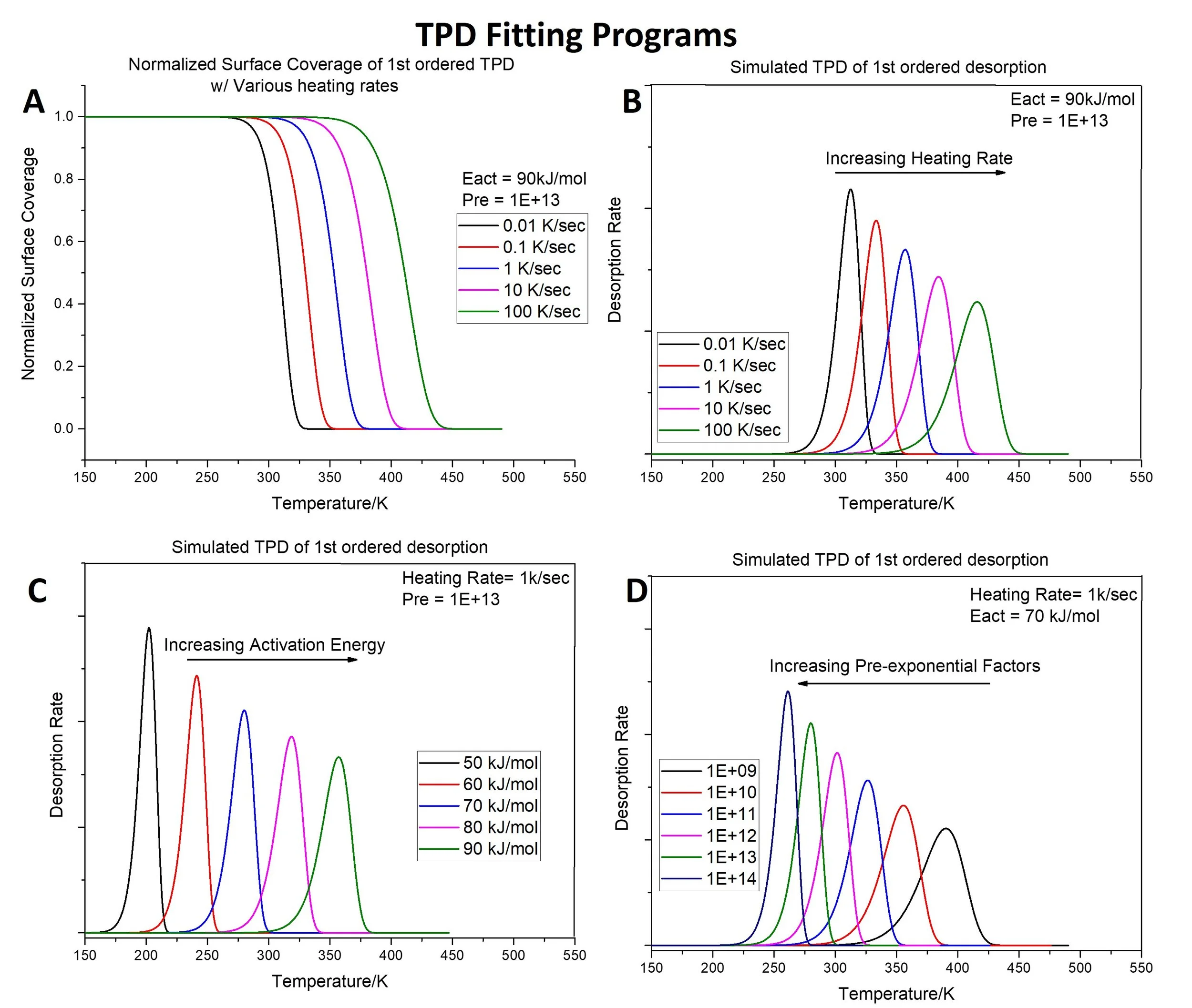
Figure from TPD Fitting Programs: Shifting peak centers from various parameters
Computational Chemistry
Computational chemistry is a powerful tool because it enables researchers to probe systems that are often inaccessible experimentally. By applying quantum mechanical and statistical models, it allows scientists to predict aspects of a system such as molecular structures, reaction energetics and mechanisms, or even spectroscopic signatures, to provide insight that complement or even guide laboratory measurements. As a result, computational chemistry accelerates discovery, supports rational design, and strengthens the interpretive framework underlying modern chemical and materials research.
Experience on High Performance Cluster (HPC) Resources:
1) University of Wisconsin – Milwaukee: Mortimer
a. Vienna Ab initio Simulation Package (VASP)
b. QuantumATK
c. Quantum ESPRESSO
d. Autodock VINA
e. Gaussian 16
2) Argonne National Lab - Computing Facility: Theta
a. Vienna Ab initio Simulation Package (VASP)
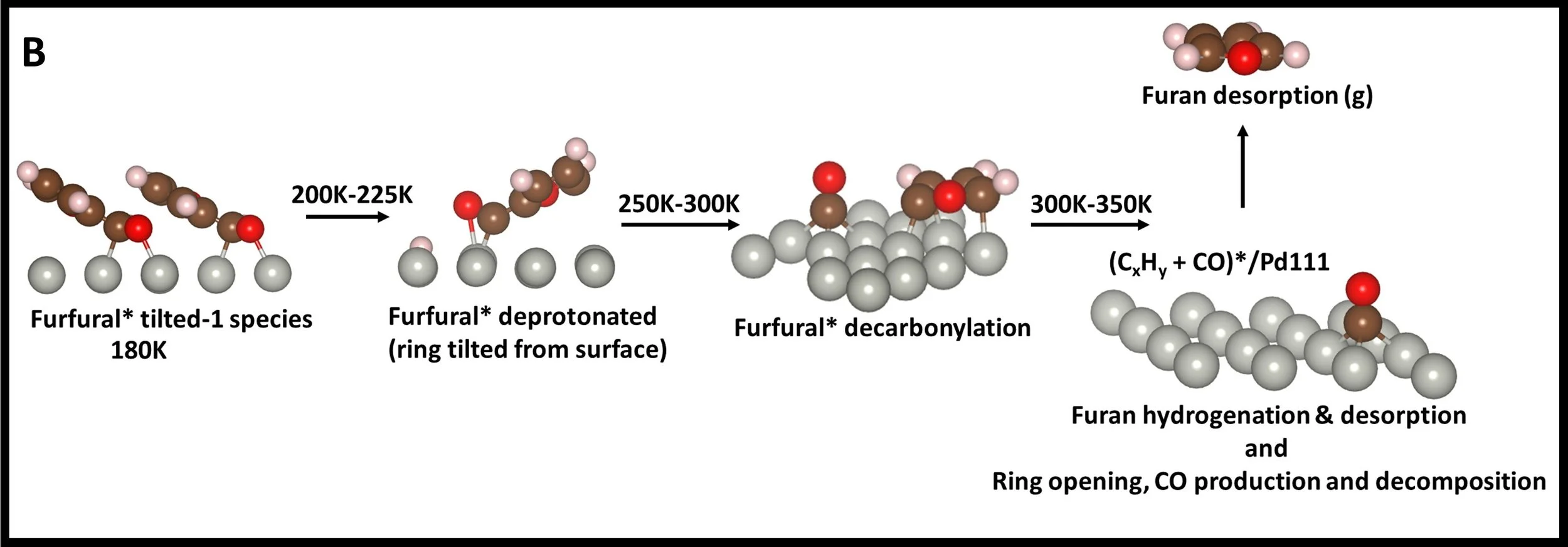
Schematic Diagram of Furfural’s reaction on Pd(111) - Calculated from cNEB methods
Verified using Reflection Absorption Infrared Spectroscopy
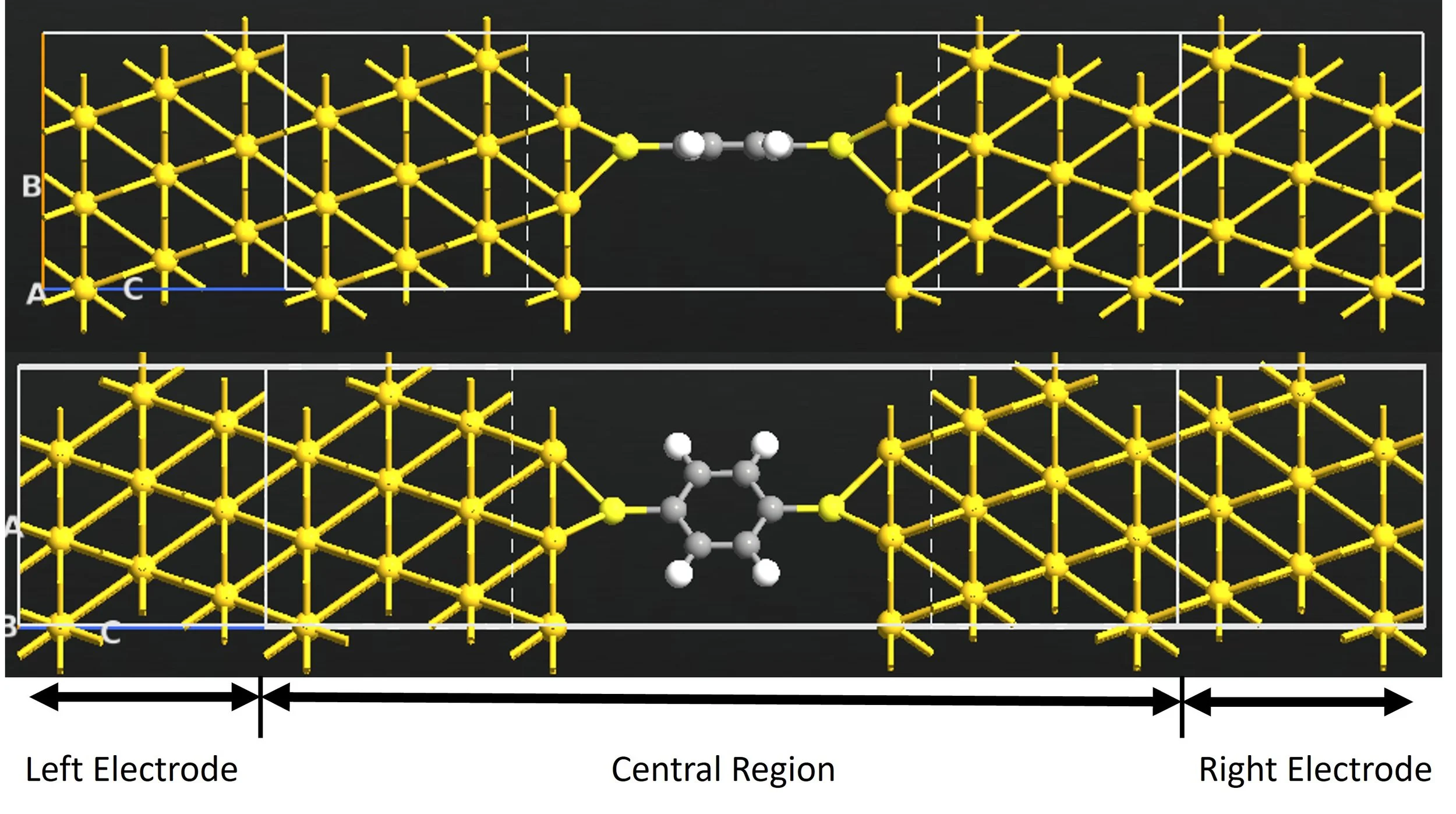
QuantumATK: Molecular Junction with 1,4-Benzene Dithiol adsorbed between two gold electrodes
Drug Discovery
Things can happen. In the dynamic global society, humanity can be reminded of its need to adapt to unforeseen challenges. The COVID-19 pandemic serves as a stark example of how quickly circumstances can shift, upending daily life, economies, and global systems within weeks. It forced individuals, communities, and nations to shift their focus, reprioritize resources, and rethink long-held norms. As a result of this global health crisis, scientists across the world swiftly shifted their research focus to support the search for antivirals and other measures aimed at reducing the devastating impact of the COVID-19 pandemic. Due to my experience in computational chemistry, I temporarily joined an interdisciplinary collaboration with the Frick research group at the University of Wisconsin-Milwaukee with the goal of assisting Dr Frick’s antiviral drug search.
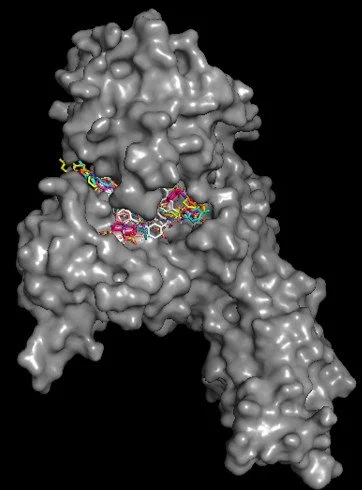
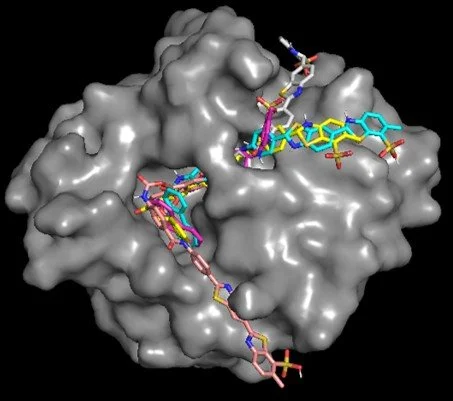
Ligands docked with 6JYT
Ligands docked wth 6W02